Positron Emission Tomography (PET)
Positron Emission Tomography (PET) can effectively pinpoint the source of many of the most common cancers, heart and neurological diseases, eliminating the need for redundant tests and diagnostic surgical procedures. Not only can PET diagnose diseases before they show up on other tests, but it can show the progress of disease and how the body responds to treatment. The doctor is looking for an increase or decrease in metabolic activity.


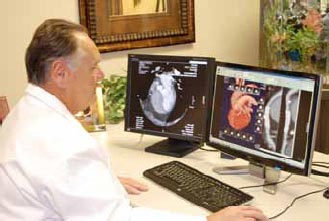
PET shows all the organ systems of the body with one single image, replacing multiple medical testing procedures with a single exam. Specifically, a PET scan uses information about the energy of certain elements in your body to show whether parts of the heart muscle are alive and working. A PET scan can also show if your heart is getting enough blood in order to keep the muscle healthy. A PET scan is very accurate because it actually shows your heart at work.

How does it work?
PET scanning uses a radioactive substance, which is injected into your bloodstream. This radioactive substance goes to areas inside your body where tissue is either damaged or not working properly. These areas usually have what doctors call increased or decreased "metabolic" activity. The PET scan machine then has hundreds of radiation detectors that can find this radioactive substance in your body. The PET scanner measures this radioactivity throughout your body and uses computers to create pictures of your heart or other body tissues.
What should I expect?
No special preparation is needed before a PET scan. If you have diabetes, your blood sugar levels will be monitored during the test, because doctors have found that the test results are not always accurate in patients with diabetes. Please inform the scheduling staff and technician if you are diabetic.

The PET scan machine looks like a long, narrow tube, or a tunnel. Some people find that they feel closed in or claustrophobic during the test.

You will be asked to remove all clothes above your waist. A technician will put a ring of detectors around your chest. You will then lie down on a table, which will be moved inside of the PET scan machine. Doctors will take a picture of your heart before the radioactive substance is injected into your bloodstream. This takes about 15 to 30 minutes. You will need to keep your arms above your head during this part of the test. Next, a radioactive substance will be injected with a needle. You will sit quietly for about 45 minutes for the substance to move through your bloodstream and into your heart. You will be asked to hold your arms above your head as doctors take another picture of your heart.
After the test, you may go about your normal activities.

For specific instructions/restriction on exam preparation, please refer to our Patient Prep Instructions. Or visit www.petscan.org